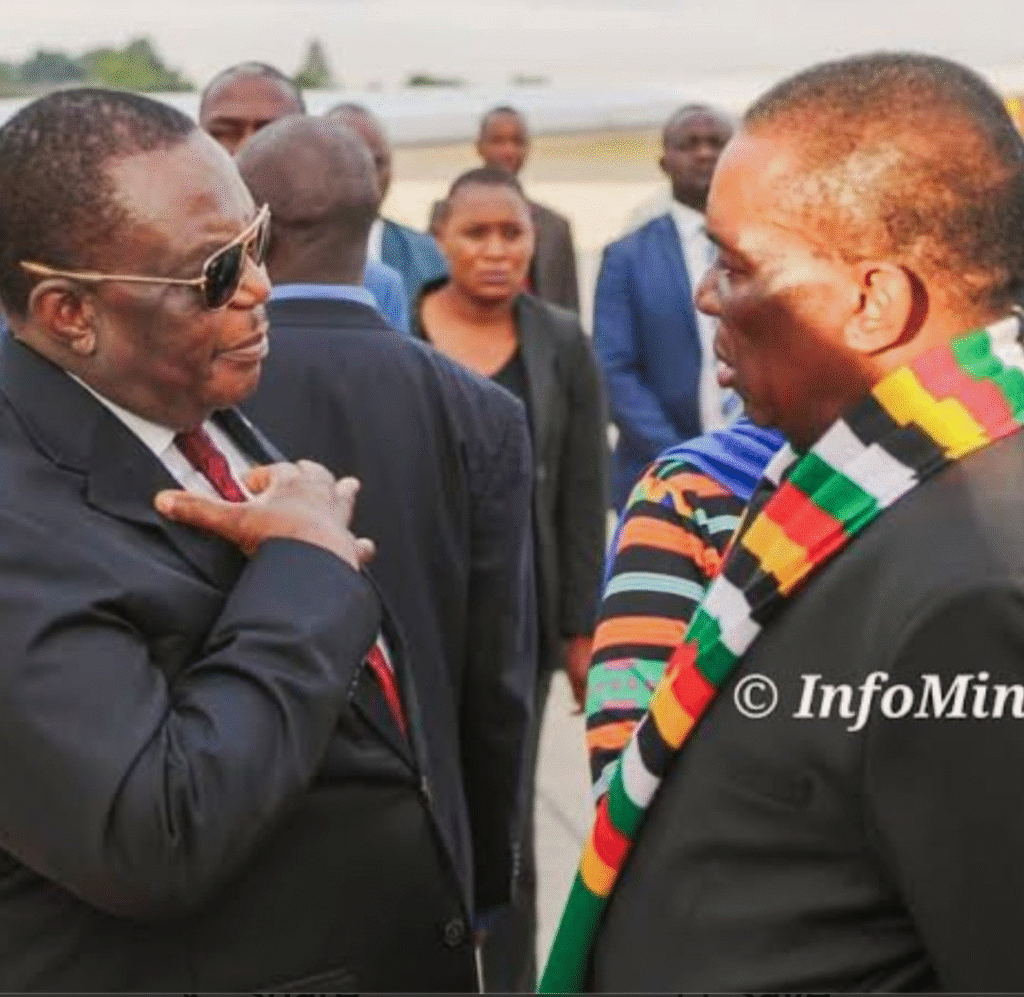
For many years Zimbabwe has lived under the same tired and recycled story of power. Leaders do not rise and fall through the ballot. Instead, everything hinges on war credentials, army loyalty, and the ability to keep the ruling party intact. Now once again, talk is swirling about what will happen after President Emmerson Mnangagwa. Some claim that his deputy Constantino Chiwenga is next in line. Others whisper about deep divisions and power struggles between the two. But when we look closely at their history, the truth is much more complicated.
The relationship between Mnangagwa and Chiwenga is not one of enemies locked in battle. It is a bond forged in blood and betrayal. These are not strangers. These are comrades from the same liberation trenches. When Robert Mugabe was ousted in 2017, it was not just Mnangagwa who orchestrated the plan. It was Chiwenga, then the head of the military, who ensured that Mnangagwa returned from brief exile in South Africa and took power. The operation that unseated Mugabe was named Restore Legacy, but it did nothing to restore the people’s will. It only replaced one strongman with another. Without Chiwenga’s tanks and troops, Mnangagwa would still be watching from the sidelines.
This is why the popular narrative that they are at war is weak and misleading. Their partnership is not driven by friendship or ideology. It is driven by survival. They need each other. In Zimbabwe, leaders do not hand over power willingly. Mugabe ruled until the bitter end, and even then he had to be shoved out. Mnangagwa is now staring at the same mirror. Will he plan his exit in a peaceful and democratic manner? Or will he cling on and try to force a constitutional change that gives him more years in power?
But here is the deeper problem. Even if Mnangagwa plans to pass the baton to Chiwenga, what does that mean for Zimbabweans? What does it say about the nature of power in this country? Is it really succession if the people are never involved? ZANU PF has never trusted citizens to choose their leaders freely. Elections are just rituals. The real decisions are made in smoky backrooms by men in suits and uniforms. When the heat gets too high within the party, they switch faces just enough to cool things down, but the system stays the same.
The entire discussion around succession is not a discussion about democracy. It is about which faction of ZANU PF will keep control. Will Mnangagwa outmaneuver everyone and stay longer? Will Chiwenga finally step in and claim his reward? Or will some younger or more ambitious players try to push both aside? These are the questions dominating the corridors of power. But they are not the questions the people are asking.
Ordinary Zimbabweans are tired. Tired of recycled leaders. Tired of being spectators in their own country. Tired of pretending elections matter when the outcomes are known before the first vote is cast. The truth is painful but clear. As long as ZANU PF rules, there will be no planned succession that respects the will of the people. There will only be deals made to protect old networks of power and privilege.
For nearly half a century, Zimbabwe has never had a peaceful and honest transfer of leadership rooted in public will. Every change has come through violence, manipulation, or betrayal. So the question should not be who takes over after Mnangagwa. The real question is when will Zimbabwe finally break the cycle. When will the people get to decide without fear, without being used, and without being lied to. Until that day comes, talk of succession is just another chapter in the same sad book.
About The Author
