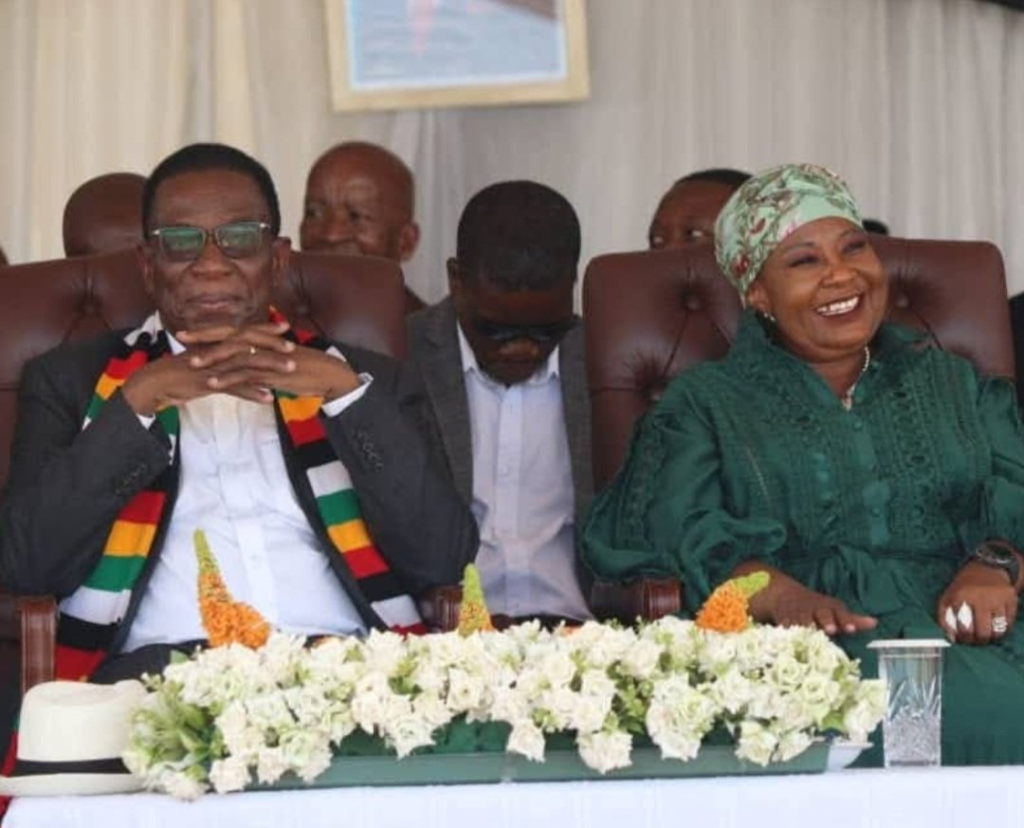
President Emmerson Mnangagwa’s recent trip to Chiweshe to celebrate his wife’s academic achievement has stirred more than just applause. Dr Auxillia Mnangagwa, the First Lady, was awarded a Doctor of Philosophy in Tourism and Hospitality Management by Midlands State University. Her husband personally capped her during the graduation ceremony in Gweru, a gesture that symbolised more than marital pride. It symbolised the uncomfortable fusion of politics and academia that has plagued Zimbabwe for years.
This event shines a spotlight on a disturbing trend. In Zimbabwe, political elites are increasingly chasing PhDs not out of academic curiosity but as a strategy to solidify influence and gain political respect. This isn’t a new phenomenon. We saw the same with former First Lady Grace Mugabe, who in 2014 controversially obtained a PhD from the University of Zimbabwe. The ink on her thesis was barely dry before people began asking questions. Her degree was seen by many as fake, and it ultimately added to the storm of criticism that surrounded her until her husband was ousted in the 2017 coup.
Another name that comes up is Vice President Constantino Chiwenga, who reportedly holds a PhD from the University of KwaZulu-Natal. While he flaunts the title with pride, the public remains skeptical about the authenticity and rigor behind it. Was it earned through academic discipline or handed out as a badge of elite privilege?
This rush by politicians to add “Dr.” before their names reflects a deeper issue called academic credentialism. It is the practice of acquiring degrees not to gain real knowledge or improve one’s ability to serve, but to project an image of intelligence and authority. In this twisted game of optics, a PhD becomes just another piece of regalia — no different from a fancy car or an expensive suit. It is not about scholarship or service, but power and perception.
This misuse of education distorts the purpose of academia. When leaders chase degrees simply for the title, it undermines the credibility of both the individual and the institution granting it. Real education is supposed to challenge the mind and sharpen one’s ability to make meaningful contributions to society. It is not supposed to be a ladder to climb over others or a shortcut to influence.
The consequences are damaging. Citizens begin to distrust not only their leaders but also the institutions that confer these degrees. Universities lose credibility. Young people grow disillusioned with the education system. Why should they toil for years to earn honest qualifications when politicians seem to pick theirs up as easily as collecting suits from the tailor?
In an ideal Zimbabwe, education would be the foundation for better governance. Leaders would pursue it to gain insight, not applause. They would read not to impress, but to understand. And in turn, they would lead a country that values depth over decoration. Instead, we are watching a parade of political elites who care more about the letters before their names than the lives of the people they claim to serve.
Celebrating the First Lady’s degree without questioning the motives behind it is dangerous. It sends the message that power can buy prestige. That leaders can pretend to be educated while the rest of the country suffers under policies made in ignorance.
Zimbabwe does not need more political PhDs. It needs servant leaders who read to grow, learn to lead, and earn titles through honest labour. Until that happens, we will continue watching the stage play of Zimbabwean politics, where education is a costume and power the only curriculum that matters.
About The Author
