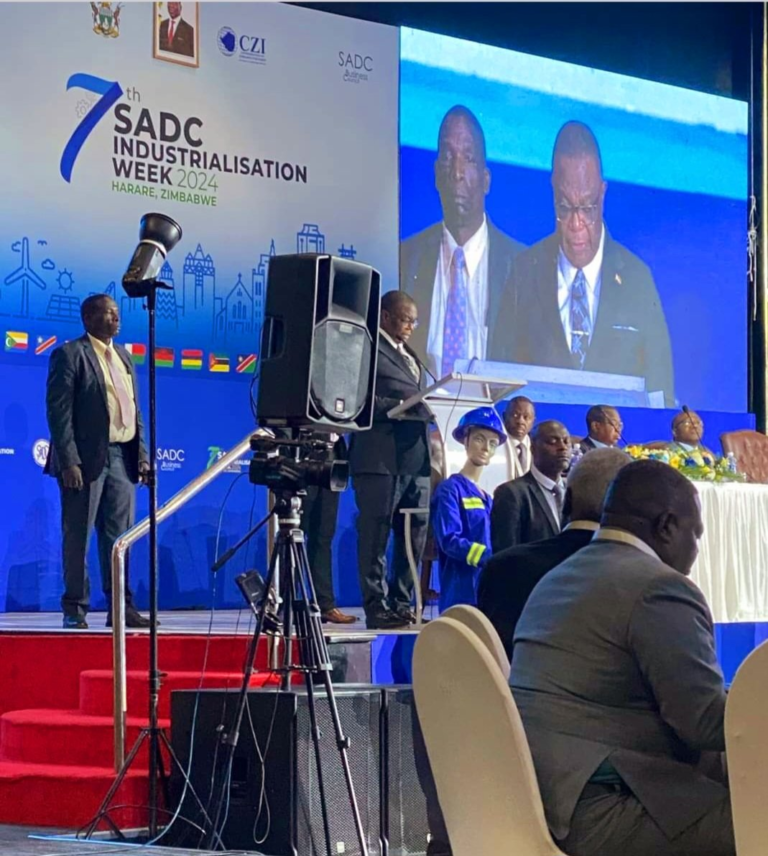
SADC INDUSTRIALISATION WEEK EXPOSES ZIMBABWE’S COLLAPSE
The Southern African Development Community Industrialisation Week is being held in Harare from July 28 to August 2 2024. The theme is promoting innovation for sustainable economic growth and building a truly industrialised SADC region. But anyone familiar with Zimbabwe’s economic realities would find the event painfully ironic. While dignitaries speak of progress at the Harare International Conference Centre Zimbabwe continues to plunge deeper into de-industrialisation poverty and economic despair.
The goal of the week is clear. Countries in the region along with private sector players international organisations policymakers banks researchers and civil society have come together to exchange ideas on how to spark industrial growth. The program includes seminars exhibitions gala dinners factory tours and workshops focusing on areas such as mineral and agro-processing infrastructure development and youth entrepreneurship. There is also emphasis on aligning with the African Continental Free Trade Area which aims to boost intra-African trade.
But these lofty aspirations fall flat against Zimbabwe’s economic background. Since the year 2000 Zimbabwe has watched its once vibrant industrial base crumble. Thousands of companies have shut their doors. Renowned global brands like Anglo American plc Lonmin Plc BP Shell and Rio Tinto have pulled out of the country. These exits were driven by hostile business policies chaotic land reforms the indigenisation agenda and rampant corruption. The result is a toxic economic climate that has destroyed investor confidence.
It is almost unthinkable that this is the same country that in 1980 stood as the second most industrialised nation in Sub-Saharan Africa after South Africa. Zimbabwe had robust manufacturing mining and agricultural sectors. Today those pillars lie in ruins. The country has become a textbook example of economic mismanagement. Policies that punish productivity reward cronyism and ignore the fundamentals of sound governance have turned a promising economy into a cautionary tale.
The numbers are damning. Unemployment is around 90 percent with most Zimbabweans surviving in the informal sector where selling second-hand goods or food items is a daily hustle. Formal manufacturing is almost extinct. By 2015 the sector had already collapsed with Bulawayo once the pride of Zimbabwe’s industry now dominated by churches and abandoned warehouses. Once affectionately called Kontuthuziyathunqa for its smoking factories Bulawayo now symbolises industrial death.
The United Nations Economic Commission for Africa has warned that no country has successfully lifted millions out of poverty without industrialising. They emphasise that industrialisation is not optional it is essential. Southern Africa needs it desperately. Yet Zimbabwe the current host of SADC Industrialisation Week stands as the region’s biggest industrial failure. How can a nation help lead industrial growth when it cannot stabilise its own economy or retain basic productive capacity
For Southern Africa to make progress it must look beyond the fine speeches and shiny exhibitions. It must build real capacity adopt sound policies and attract long-term investment. Value chains must be developed and protected. Infrastructure must be upgraded. Governments must create environments where industry can thrive not merely survive. And countries like Zimbabwe must confront their failures and implement urgent reforms before they can contribute meaningfully to regional development.
SADC Industrialisation Week is supposed to be about hope opportunity and transformation. But in Zimbabwe it feels more like a funeral for an economy that was once full of promise. As leaders toast to future plans ordinary citizens wonder if any of it will ever translate into real change. Because right now the biggest smoke coming out of Zimbabwe is not from factories but from the wreckage of its broken dreams.
About The Author
